When to Book Permanent Christmas Lights in Minnesota

Most people start thinking about permanent Christmas lights in late November, standing in the yard, looking at a tangle of last year's strands, having just decided they're done doing this.
That's an excellent reason to buy them. It's a hard month to install them.
Here's how the calendar actually works in Minnesota, with no manufactured urgency. I'm not going to tell you spots are vanishing — I'm going to tell you what the weather does and what that means for scheduling, and you can decide.
The quick answer
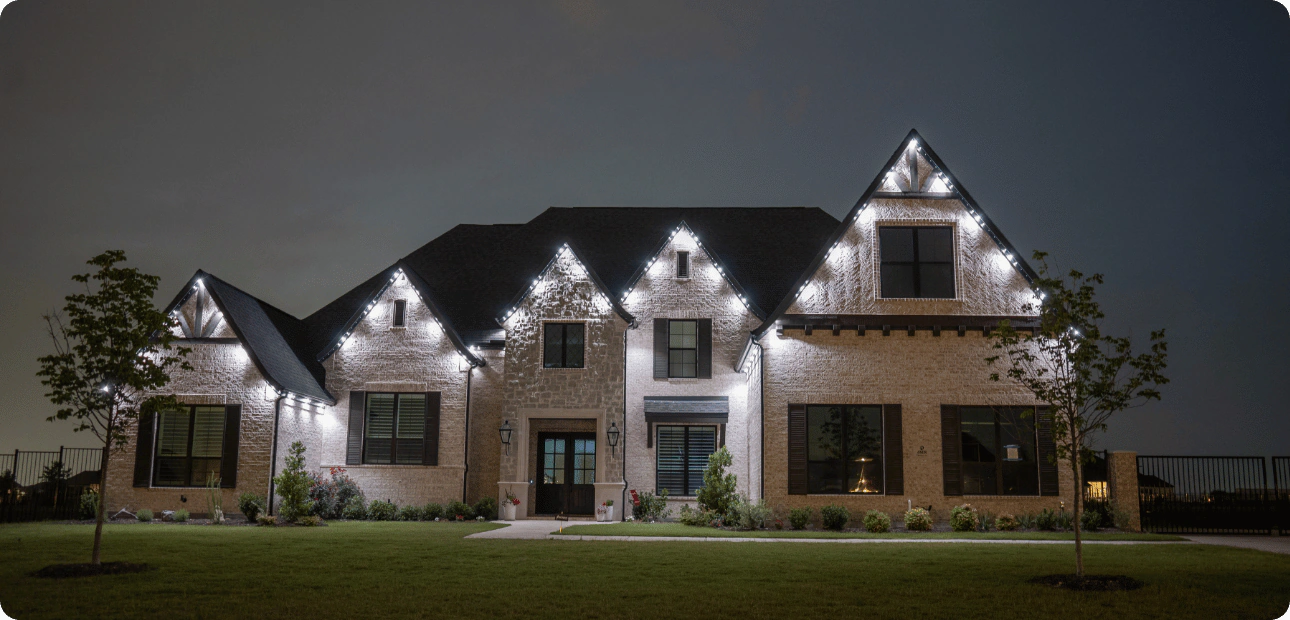
For a Minnesota home, the best time to book permanent Christmas lights is August through early October. The fascia is dry, the crew isn't working against daylight, and you're lit well before Thanksgiving. Booking in November is possible but tighter, since it's the busiest stretch of the year and the weather stops cooperating — an ice-covered fascia is genuinely unsafe to work on. If you miss the fall window entirely, spring is a perfectly good time to install; you'll simply have the system in place for next season instead of this one.
Why late summer is the easy window
Three practical reasons, none of them about our calendar.
Dry fascia mounts better. The track fastens to your fascia or soffit, and that goes best on dry, warm material. Aluminum and vinyl both move with temperature — installing in mild conditions means the track sits the way it'll sit for the next twenty years.
Daylight. In August a crew has thirteen-plus hours of usable light. By late November they've got about nine, and part of that is bad light. Rushed work at dusk is exactly how the failures I wrote about in our install-quality piece happen.
You get the whole season. Install in September and the system is on your house for Halloween, Thanksgiving, all of December, Valentine's Day, and the Fourth of July. Install December 20th and you paid the same price for eleven days of the first year.
What actually changes as the year goes on
Rather than pretend there's a deadline, here's the honest state of each window.
August to early October — the easy window. Weather cooperates, scheduling is flexible, and there's slack if your house needs something unusual. If you're going to do this, this is when.
Mid-October to mid-November — the busy window. Still very doable, still good weather most years. This is when the phone rings hardest, so the calendar is tighter and the gap between your quote and your install date gets longer. Book here and you'll be fine; just don't expect same-week.
Late November to December — the weather window closes gradually. We install through December when conditions allow. Some Minnesota Decembers are fine. Others aren't. The honest constraint is ice: hanging track on an ice-covered fascia is how installers get hurt and how jobs get done badly. If we can't do it right, we'll tell you and schedule you for spring rather than take your deposit and force it.
January through spring — the quiet, underrated window. Nobody thinks about Christmas lights in April, which is precisely why it's a good time to buy them. You get unhurried scheduling and the crew's full attention, and the system is ready and tested long before you need it.
The thing about buying in December
If you're reading this in late December because you just took down your strands for the last time, do this: get the quote now, install in spring.
You'll be measured properly, you'll have time to think about zones and controller placement instead of deciding under pressure, and you'll never handle a strand again. The alternative — trying to squeeze an install into the two weeks before Christmas — is how people end up with the crooked track I get called out to fix.
What booking actually involves
Two visits, and neither is long.
The estimate. We come measure your actual roofline. This matters more than people expect: quotes in this category are per linear foot, and the difference between a guess from the street and a real measurement is significant. We put the number in writing at that visit. No same-day-only pricing.
The install. Most homes are one day. Larger or more complicated rooflines run into a second, and we tell you which one you are before we start rather than after. You don't need to be home for all of it, but you do want to be there at the end so we can walk you through the app and set your first scenes together.
Between those two, there's lead time for materials — your track is color-matched to your house, which means it's ordered for your house.
Does it need to be done before it snows?
Not strictly, but it's a fair instinct. What matters isn't snow on the ground, it's ice on the fascia and the mounting surface being workable. A dry, cold day in December is often fine. A thirty-eight-degree day with freezing drizzle is not, regardless of the date.
We'd rather move you than force it. That's not a scheduling preference, it's the difference between a system that lasts twenty years and one that needs a service call in March.
So when should you call?
If you want lights on for this holiday season, aim for a quote in August or September. If it's already November, call anyway — we'll tell you honestly whether we can get to you before Thanksgiving, and if we can't, we'll say so rather than string you along.
And if it's February and you're reading this after a long winter of looking at a dark house: that's genuinely a great time to plan it. Get a quote and be done thinking about it.
About the author
Joe Dvorak · Co-owner, Gray Duck Lighting
Joe Dvorak co-owns Gray Duck Lighting and has spent his career in Twin Cities exterior contracting. He also owns Modern Exterior Systems, a Minnesota roofing and siding company.
Keep reading
Are Permanent Christmas Lights Safe? What the Manufacturers Actually Publish
Permanent lights run on low-voltage 12V or 24V power. But only three of six brands publish any safety listing at all — here's exactly what each one says.
Will Your HOA Approve Permanent Lighting? How to Ask, and What to Show Them
Most Twin Cities HOAs approve permanent lighting once the board sees it's a color-matched track, not a strand. Exactly what to submit, and how to word it.
Permanent Lighting Warranties: What's Actually Covered
'Lifetime' warranties in permanent lighting have asterisks: daytime-use exclusions, 30-day registration deadlines, and labor that isn't covered. Quoted in full.