Hung once. On every December after that.
Permanent Christmas lights
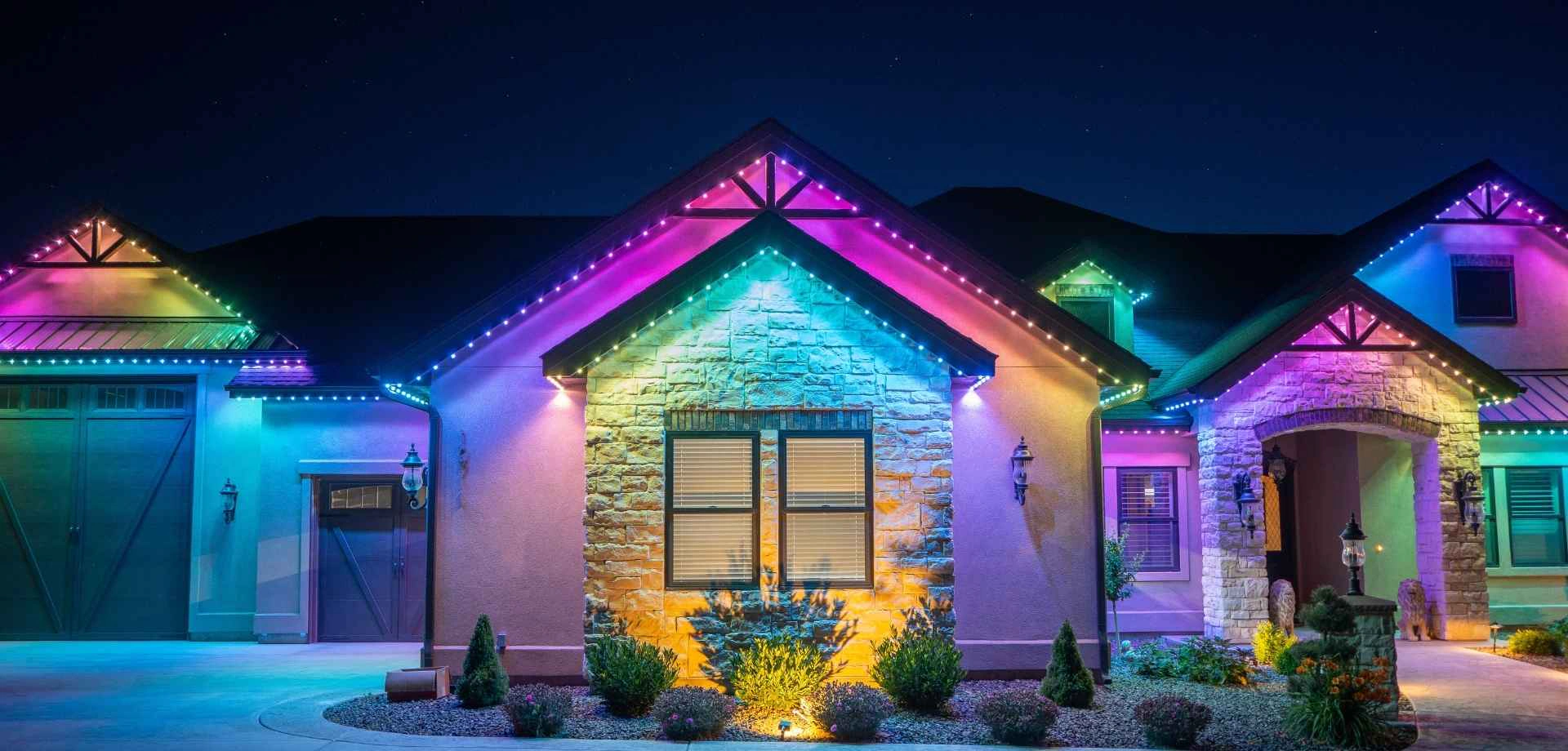
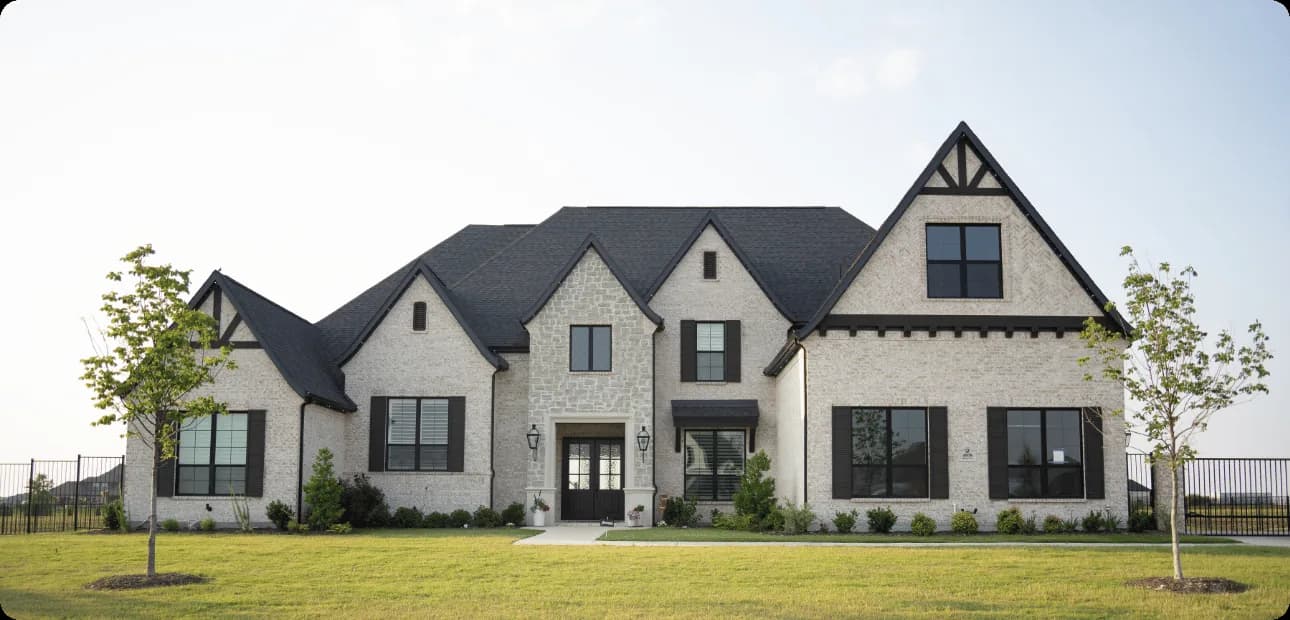
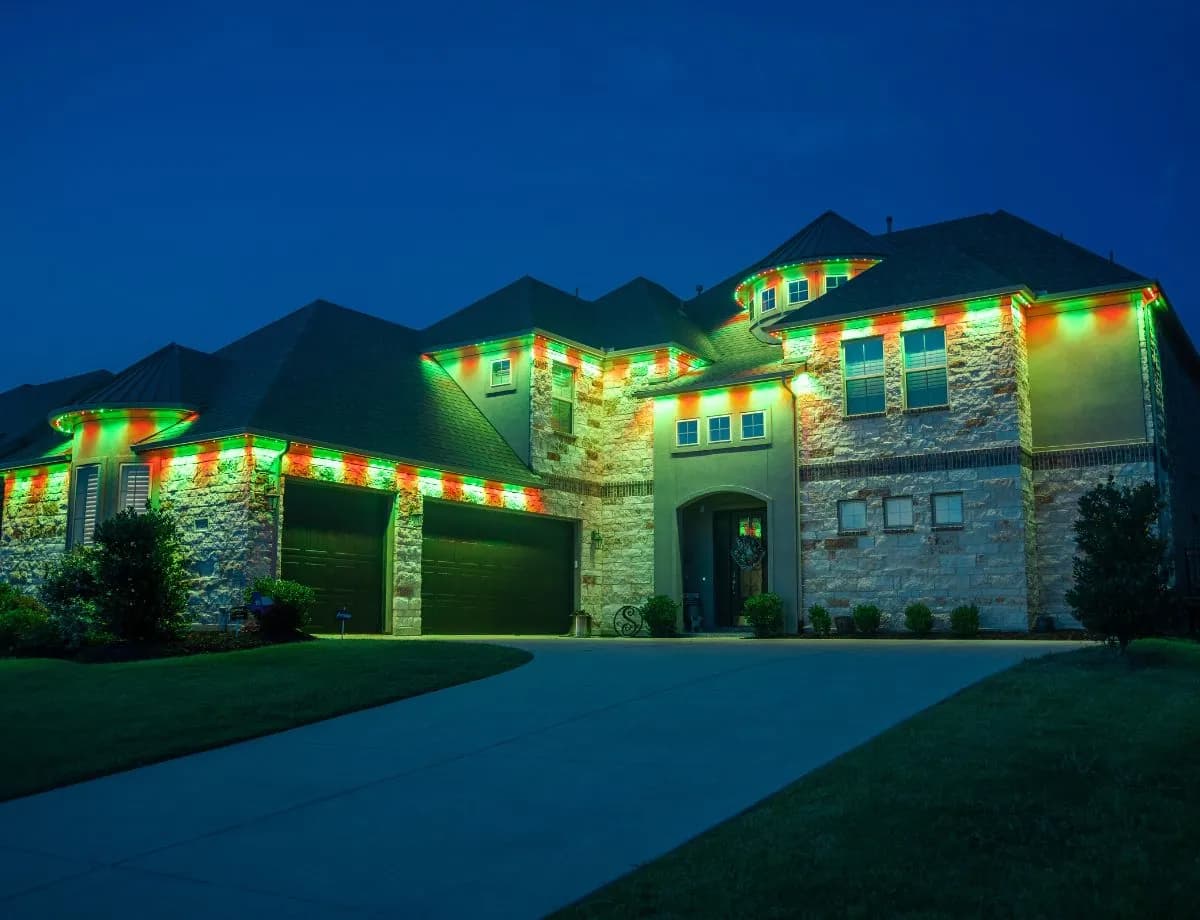
Permanent Christmas lights are individually controlled LED fixtures installed once under your roof edge and left on the house year-round. Instead of climbing a ladder every November, you open an app and turn on red and green. In the Twin Cities they're priced per linear foot of roofline and quoted in writing after a free on-site measure. The track is color-matched to your trim, so in July it reads as a shadow line, not as Christmas lights somebody forgot to take down.
Red and green, then everything else
Drag it and see
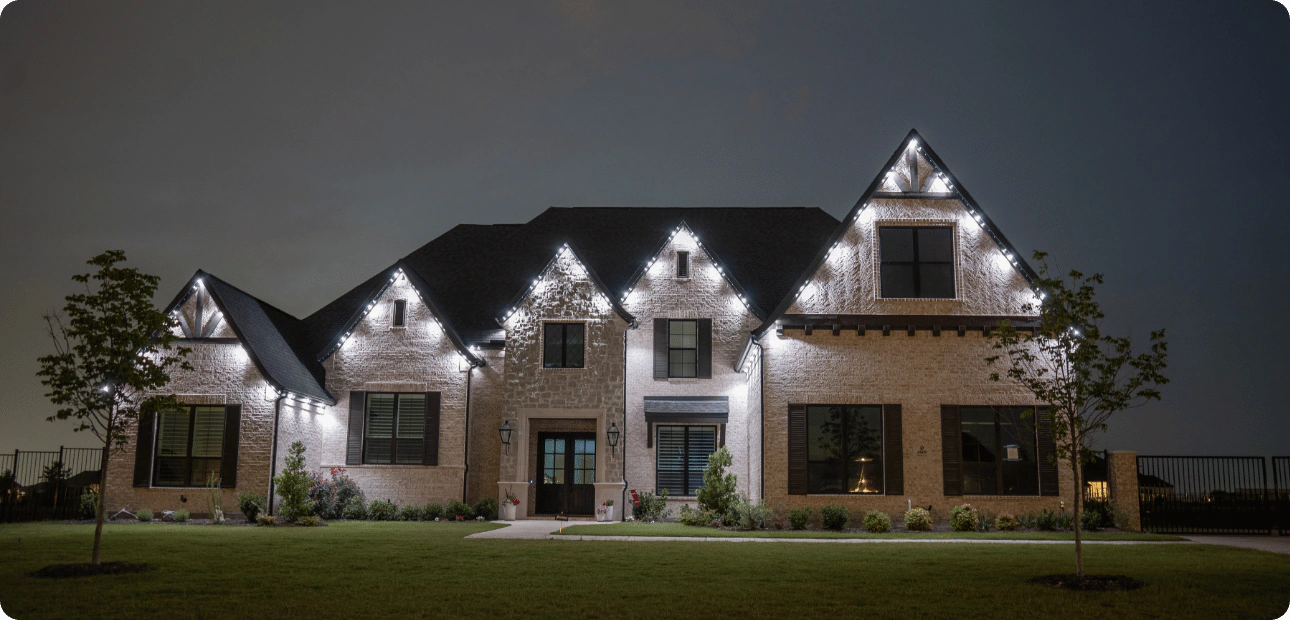
The same fixtures that do Christmas do warm white the other eleven months. That is the part people underestimate.
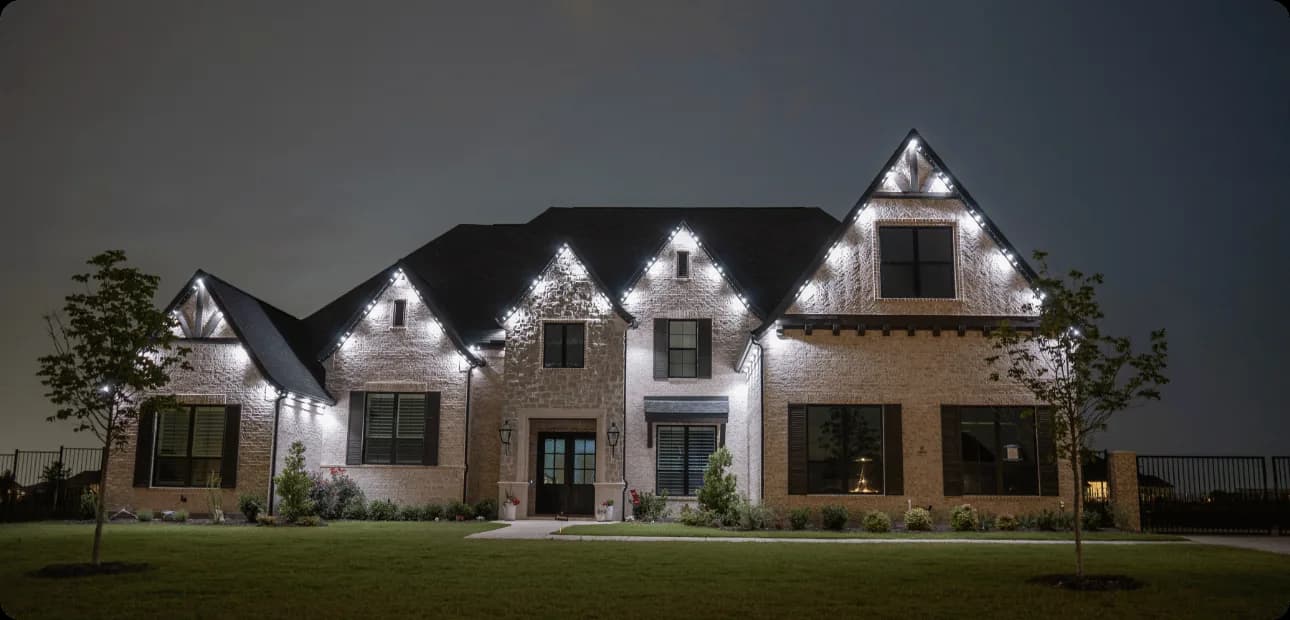
Christmas is the reason people call, but the same system runs year round — that page covers the everyday side of it.
The honest comparison
Versus paying someone every year
Having traditional lights hung and removed runs $800–1,500 a season in the Twin Cities, and you pay it again every year for as long as you own the house. A permanent system is a one-time cost — measured to your roofline and quoted in writing. Somewhere between year five and year eight it becomes the cheaper option — and unlike the seasonal crew, it also gives you every other holiday, accent lighting, game day colors, and security lighting the rest of the year.
If you're moving in two years, hire the seasonal crew. We'll tell you that on the phone rather than sell you something that doesn't pay off. The full year-by-year math is on the Christmas light installation page.
No ladder, ever again
Not in November, not in January, not on frozen ground in the dark.
Nothing to store
No bins in the garage, no untangling, no dead strands to replace.
Changes in ten seconds
Red and green December 1, back to warm white on the 26th.
Scheduled by date
Set the holiday scene in October and forget about it.
What's actually on the house
How the system works
Four parts. None of them are tape.
Color-matched track
A low-profile aluminum channel, ordered in your fascia or trim color and fastened — screwed, not glued — under the roof edge. In daylight it reads as a shadow line.
The fixtures
Individually addressable LEDs rated at 72 lumens each, with dedicated red, green, blue, and true warm-white diodes. 16 million colors; white that's actually white.
The controller
Mounts near an exterior outlet and runs up to eight independent zones — front peak doing one thing, porch doing another. No electrician needed for most homes.
The app
Scenes, schedules, sunset timers, music sync, Alexa/Google/Siri. Set the holiday calendar once in October and the house changes itself.
The part that matters at 20 below
Installed for Minnesota, not for the brochure
Permanent lighting fails two ways in this climate: hardware that couldn't handle the weather, and installs that never planned for it. We can't change physics, but we control the install — so every Gray Duck system is installed to a storm-ready spec: a surge protector on the controller as standard equipment (summer lightning is what actually kills these systems), firmware updated before the crew leaves (the most common cause of “my lights won't reconnect after an outage”), and track fastened and spaced for ice loading with somewhere for meltwater to go.
You also get a one-page card on your controller: if the lights ever drop off WiFi after a power outage, it's a 30-second fix you can do in slippers. And if it isn't, you call us — the crew that installed your system is the crew that services it.
Surge protection standard
Not an upsell. Lightning and power events are the #1 hardware killer in the Midwest, so protection is built into every install.
Firmware done at install
Most WiFi-reconnect complaints in this category trace to stale firmware. We update it before we leave, not after you call.
Fastened for ice
Screws sized for your fascia material, spaced for expansion and snow load. Nothing on this system is held up by adhesive.
Local service, named
Service calls go to the installing crew — not a national ticket queue. We're in Bloomington, not a call center.
The other honest comparison
What about the DIY kits?
The $300–800 kits (Govee is the big name) are a real option, and for some homes the right one. Here's the fair version: they use the same idea — addressable LEDs along the roofline — at a fraction of the price. The differences are in how they attach and what happens when something fails. The kits mount with adhesive tape and clips per the manufacturer's own instructions, carry a 12-month warranty, and publish cold ratings down to about −4°F to −22°F depending on model. A professional system is screwed into the fascia in an aluminum channel, carries 5 years on parts and 5 years on labor when we install it, and comes with someone local whose phone number you have. Minnesota Januaries regularly go past every number in that first list.
If you're handy, plan to stay a year or two, or want to test the idea cheaply — buy the kit, genuinely. If you want it up once and working in February, see how the systems actually compare before you decide.
Timing matters more than people expect
If you want lights on for the holidays, get measured by early October. September and October are the busiest weeks of our year by a wide margin, and install slots go first-come. We install into December when the weather allows — but a cold snap can push a job, and we'd rather tell you that in October than the week before Christmas.
Questions
Permanent Christmas lights, answered
What are permanent Christmas lights?
Permanent Christmas lights are individually controlled LED fixtures mounted once under your roof edge and left on the house year-round. Instead of hanging strands every November, you open an app and turn on red and green. The track is color-matched to your trim, so during the day it reads as a shadow line rather than Christmas lights left up in July. The same system does warm white the rest of the year, which is why most people end up using it far more than 30 days a season.
How much do permanent Christmas lights cost?
In the Twin Cities it's priced per linear foot of roofline, so the total depends on how much of the house you light — we measure your actual footage and put the exact number, per foot and in total, in writing at a free visit. Compare it to $800–1,500 a season to have traditional lights hung and taken down: a permanent system pays for itself somewhere between the fifth and eighth year, and it does far more than Christmas in the meantime.
Do permanent Christmas lights look tacky in the summer?
Not if they are installed correctly. The track is ordered in your fascia or trim color and tucks under the roof edge, so from the street you see a clean line and not a row of bulbs. The failure mode is a sloppy install with mismatched track and visible wire — which is exactly what we spend our time avoiding, and why our exteriors background matters here.
When should I schedule permanent Christmas lights?
Book by early October if you want them on for the holidays. September and October are by far our busiest weeks — everyone wants lights before Thanksgiving, and installation slots fill first-come. We install into December when weather allows, but a cold snap can push a job, and we would rather tell you that in October than the week of the 20th.
How long do permanent Christmas lights last?
The LEDs we install are rated for 50,000 hours by the manufacturer. At a typical five to six hours a night, that is well over 20 years of use before the diodes reach end of life. The system carries a 5-year parts warranty and 5 years on labor, backed locally by us — if something stops working, the crew that installed it comes back out.
Are permanent Christmas lights as bright as regular string lights?
Brighter than most. Each fixture in the system we install produces 72 lumens with dedicated red, green, blue, and true warm-white diodes — not white faked by blending colors, which is what gives some permanent systems a purple-ish "white." At holiday brightness the house is clearly lit from down the block; for everyday use most people run them dimmed well below maximum.
Do permanent Christmas lights work with Alexa and Google Home?
Yes. The system we install connects to Alexa, Google Home, and Siri in addition to its own app, so "turn on the Christmas lights" works from the couch. Day-to-day, most homeowners let the schedule run everything — lights on at sunset, off at a set time, scenes changing by date — and never touch a switch at all.
Will my HOA allow permanent Christmas lights?
In most Twin Cities associations, yes — the reason is that the system is nearly invisible when it is off. The track is color-matched to your fascia and tucks under the roof edge, so there is no visible fixture for a covenant to object to during the day. If your HOA requires an architectural review, we will provide the spec sheet and daytime photos for your submission. It is worth checking your covenants before install, and we are happy to help with that conversation.
Read before you buy
The questions behind the questions
When to Book Permanent Christmas Lights in Minnesota
August to early October is the right window for a Minnesota install — daylight and dry fascia, not fake urgency. What changes after Thanksgiving.
4 min read
Are Permanent Christmas Lights Safe? What the Manufacturers Actually Publish
Permanent lights run on low-voltage 12V or 24V power. But only three of six brands publish any safety listing at all — here's exactly what each one says.
6 min read
Will Your HOA Approve Permanent Lighting? How to Ask, and What to Show Them
Most Twin Cities HOAs approve permanent lighting once the board sees it's a color-matched track, not a strand. Exactly what to submit, and how to word it.
5 min read
Free design consultation
Let's see what your house looks like lit
We'll measure your roofline, show you the options, and give you a real number. No pressure, no all-night pitch.